The Arctic, a frozen land rich in little-known biodiversity
Long perceived as a white and silent desert, the Arctic region is actually home to significant biodiversity. From snow-capped peaks to the depths of the ocean, many species have developed unique adaptations to survive in this extreme environment. Today, climate change is transforming this fragile balance and disrupting the daily lives of Arctic fauna and flora, both on land and at sea. How do living organisms manage to complete their life cycles in this polar environment, facing extreme seasonal variations in light? How do they live in sea ice? How do they survive the low temperatures?
Why is biodiversity at the North Pole unique?
Varied habitats
When we imagine the Arctic, images of ice in all its forms (sea ice, icebergs, glaciers, etc.) immediately spring to mind. However, this region is home to a wide variety of habitats that support a world of living organisms adapted to extreme conditions.

On land, the tundra, where flora and fauna are scarce, is home to precious freshwater reservoirs as well as stone deserts.
At sea, a multitude of species find refuge in the ice floes, on the surface or in the heart of the ice, but also in the water column and on the seabed.


An extreme environment shaped by ice and cold
The Arctic is a region where temperatures can drop well below -40°C in winter and where the air can be as dry as in a desert. In summer, although the sun returns and shines constantly, temperatures do not exceed 10°C.
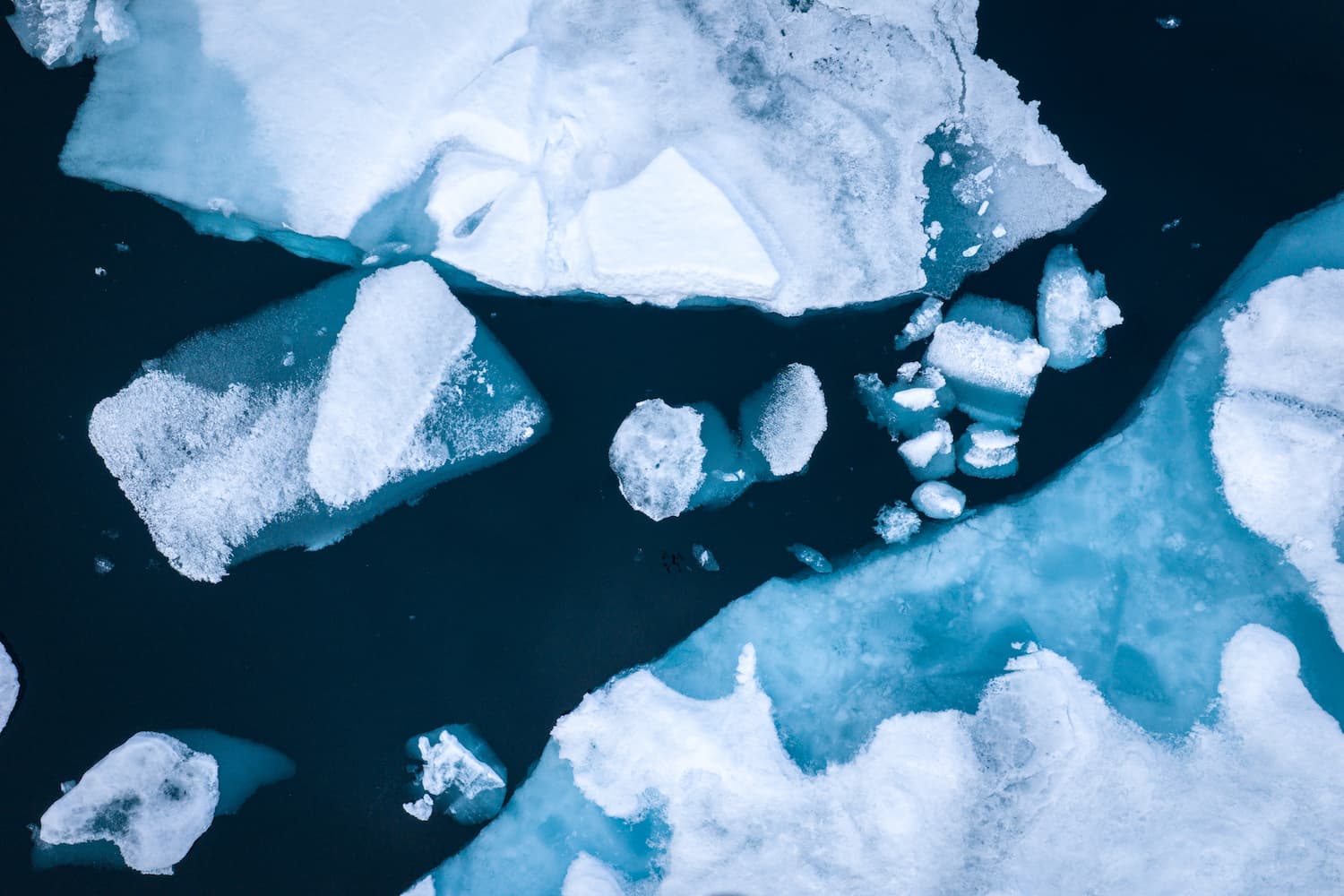
The ice floe formed by the freezing of seawater on the surface is anything but flat. On the contrary, it is a chaotic terrain made up of overturned ice blocks and overlapping plates (compression ridges), which can open or close depending on currents and winds. It provides a key habitat for many marine and terrestrial species, allowing them to rest, feed, and protect themselves from predators.
Polar day and polar night: an extraordinary biological rhythm
Beyond the Arctic Circle, and unlike most regions of the globe, the length of day and night can become extreme at certain times of the year. Around the solstices, the sun can remain above the horizon for 24 hours: this is the polar day. Conversely, it may not rise at all, giving rise to the polar night.
However, outside these periods, even at these high latitudes, day and night continue to follow one another, with their lengths gradually changing over the seasons.
This phenomenon is explained by the tilt of the Earth’s axis of rotation. In the northern summer, the Northern Hemisphere is tilted toward the Sun, which illuminates this area of the globe for long periods. In winter, this tilt moves it away from the Sun’s light, plunging certain regions into prolonged darkness.
These extreme variations in light make it particularly difficult for living organisms to adopt a conventional day/night cycle, leading them to develop sophisticated and often little-known adaptation strategies.

Biodiversity essential to climate balance
Despite its apparent austerity, the Arctic plays a central role in global climate regulation. Marine biodiversity contributes to the ocean food chain and carbon absorption (particularly via plankton).
Through photosynthesis, phytoplankton captures dissolved carbon dioxide and participates in carbon storage in the ocean, thereby contributing to global climate regulation. The decline in sea ice is altering these dynamics, affecting both primary production and all associated food webs.
On land and along the coast, Arctic mammals and birds contribute to biological dispersal by transporting seeds, nutrients, and microorganisms over long distances through their movements, feeding, and excrement. These invisible exchanges promote soil fertility, the colonization of new habitats, and the maintenance of terrestrial ecosystems.
Every species, from lemming to bowhead whale, plays an essential and complementary role in this fragile balance.
What are the strategies used by living organisms to adapt to extreme conditions?
How to survive the cold?
- Slow metabolism and antifreeze proteins
Animals in the Far North expend a lot of energy to protect themselves from the cold and move around in search of food. They need rest, but since there are not always clear days and dark nights, their sleep-feeding cycle is affected. They sleep and hunt according to their needs rather than the time of day, which influences their movements and social behavior.
Other species, such as polar cod, have antifreeze proteins. These bind to small ice crystals as they form and stop them from growing, which would otherwise be fatal to the cod’s cells and therefore to its survival.
- Rich diet
Highly energy-dense, lipids (fat constituents) are crucial in helping organisms combat the cold, from the smallest bacteria to the largest marine mammals. It is a question of who can assimilate the most lipids possible within food webs through their diet.
- Insulation
Walruses and many marine animals have a thick layer of fat, called blubber, which effectively insulates them from the icy waters. In these species, this energy reserve is essential for thermoregulation in both adults and young.
In polar bears, however, the situation is different. At birth, cubs are extremely small and underdeveloped: they weigh just a few hundred grams and do not yet have a significant layer of fat. It is the shelter of the den, their mother’s warmth, and their high-fat milk that enable them to survive the first few months. As they grow, cubs quickly accumulate mass and fat, a process that is vital for coping with the extreme conditions of the Arctic environment.
- Coat, fleece, fur
Warm wool like that of the Arctic hare is a very good insulator. In fact, it is one of the mammals best protected from the cold. The density of its coat is greater than that of other species in its family, and very warm wool is hidden beneath its long, translucent hair. Thanks to its protective layers, it retains its own body heat for a very long time.
How can you survive the constant light in summer?
The sun shines 24 hours a day during the short polar summer. This constant light is both an advantage and a challenge for animal and plant species. It can dazzle, disorient, and even burn tissue with ultraviolet rays. For those that are adapted to it, it offers valuable benefits: an accelerated metabolism, better feeding conditions, and less vulnerability to predators.
For example, diatoms, microalgae (phytoplankton), have the ability to use light energy to produce their organic matter (photosynthesis). In the event of excess light, the proteins involved in photosynthesis are able to dissipate this excess in the form of heat, thus protecting this essential biological process.
Animals in the Far North must complete their reproductive cycle in the short polar summer.
- Pregnancy under control
Bearded seals are able to adjust the date of their pups’ birth, waiting for the most favorable conditions for giving birth, particularly the availability of resources.
How to survive the polar night?
- Migration
Many animals in this area travel hundreds or even thousands of kilometers to follow food sources or breeding grounds. Humpback whales, for example, do not live at the pole all year round. They are only present there in the summer, feeding when plankton is abundant during the “bloom.” At the end of the summer, they migrate south and spend the winter in warm tropical waters where they give birth to their calves.
- Camouflage
Some animals have white fur, such as the Arctic hare, the ermine, and the polar fox, which makes them almost invisible in the snow. This camouflage helps some of them protect themselves from predators and others hunt and remain undetected by their prey.
- A keen sense of hearing and smell developed for survival
These adaptations enable this unique biodiversity to survive despite one of the most hostile environments in the world.
What iconic mammals inhabit the North Pole?
The polar bear, nomad of the ice floes
The polar bear is an exceptional swimmer, protected by 11 cm of fat and dense fur, it can stay in icy water for hours. It mainly hunts seals, which it locates using its keen sense of smell, even under a meter of ice. It is also a solitary wanderer, hunting and living alone. Males can weigh up to 650 kg and run at speeds of up to 40 km/h. Females raise their young for two to three years, teaching them how to hunt and survive in this environment. The cubs are able to hunt from the age of one.
Note: To survive, it must eat 45 seals per year!

The walrus, the giant with a mustache
Walruses have long, continuously growing ivory tusks that can reach up to 1 meter in length in males. These canines are used to cut ice, pull themselves up onto blocks, and fight. Walruses average 3.5 meters in length and can weigh up to 1.8 tons. Walruses spend two-thirds of their time in the water, feeding on shellfish and sea cucumbers. Their 10 cm thick layer of blubber protects them from the cold, and they can sleep in the water thanks to sacs that act as floats.
NB: Its scientific name means “the one who walks with its teeth.”

Seals, pillars of the marine food chain
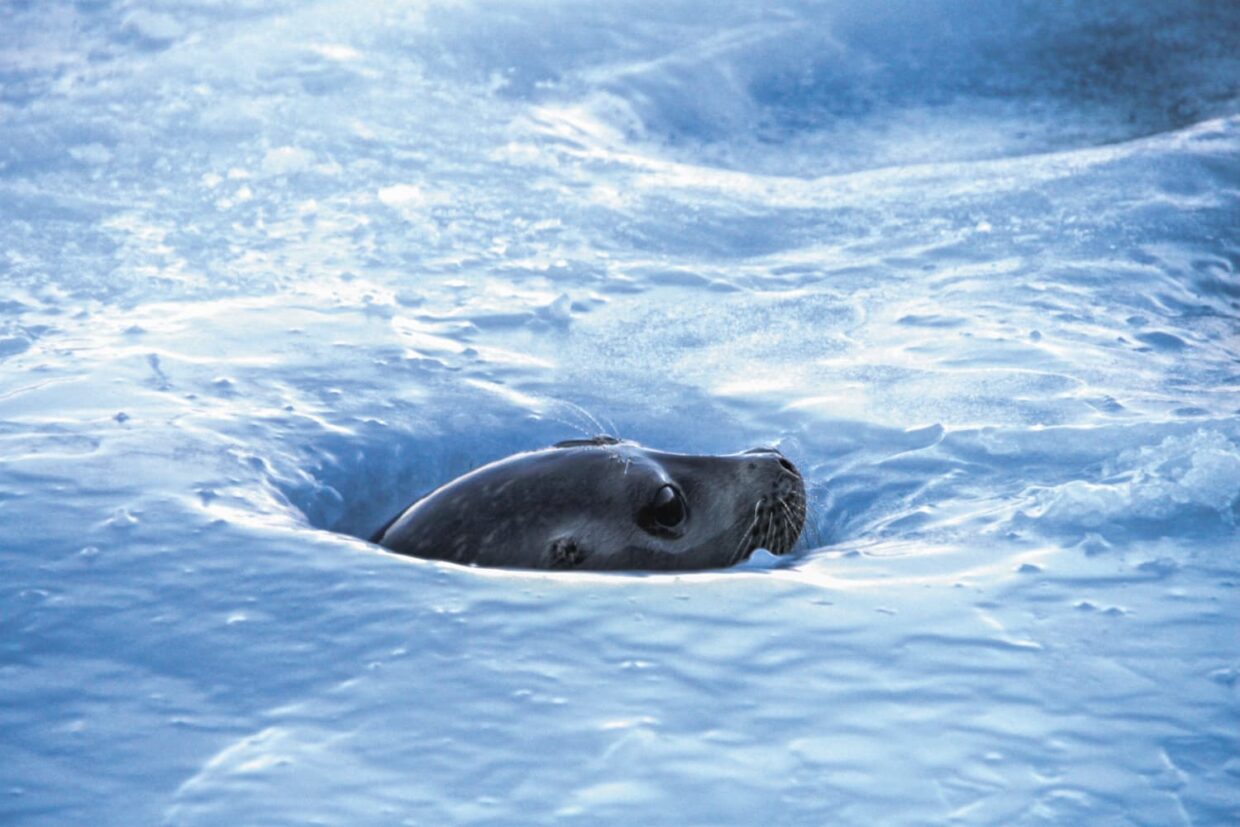
There are six species of seals in the Arctic region. Greenland seals are the most numerous. Sociable and noisy, they live and travel in groups. They dive deep to catch fish and crustaceans. Baby seals are born with very light fur and are called “blanchons.” As they grow, their skin darkens and becomes grayer and thinner. It forms a protective layer of fat.
Note: Seals have whiskers on their snouts to identify their prey. When they search the seabed rich in shrimp and clams, they sometimes come up with red heads due to the iron content in the mud.

Caribou, the largest land-based population
When living in the wild, the caribou is also known as the “reindeer” in Europe and Siberia when domesticated. It can withstand temperatures as low as -40°C and migrates long distances, up to 1,000 km. A herbivore, it searches the snow with its muzzle and hooves for food up to 80 cm deep. It mainly eats mosses and lichens. In spring, large herds move north when their young are born and south in winter to find food and shelter.
Note: They have antlers weighing 10 kg that fall off and grow back every year.

The musk ox, the largest herbivore in the tundra
Musk oxen have a double layer of fur to protect them from the cold. This is why they do not need to seek shelter in bad weather or blizzards. When they are in danger, threatened by wolves or polar bears, they form a defensive circle and place their young in the center for protection. Thanks to their hooves, they dig through the snow to find lichen and grass in winter. Adults can run at speeds of up to 25 mph.
Note: Their name comes from the musky scent they give off during mating season.

Arctic fox, ermine, and lemming: change coat twice a year
The arctic fox is slightly smaller than its counterparts in temperate regions, a trick to protect itself from the cold. Generally solitary when hunting, it is distinguished above all by its great mobility: when resources become scarce, some individuals can travel hundreds, even more than 1,000 kilometers, not to capture a single prey, but to explore vast territories in search of areas with more favorable food sources.
Fox cubs are independent at 6 months of age. In summer, the almost constant light disturbs this predator, which is accustomed to a nocturnal (in winter) or underground (in its burrows) lifestyle. The bright light can dazzle it, so it often closes its eyes halfway. To hunt, it relies primarily on its extremely developed hearing and sense of smell, which can detect prey on land, underground, or even buried under snow.
The Arctic hare is white and larger than the polar fox. It has large paws and can run up to 65 km. Its long, silky fur covers its entire body, including its paws. Its paws have claws for gripping.
The lemming, a small rodent weighing just a few grams, is essential to the local food chain. It eats plants and sometimes insects. It is the staple food of many predators (snowy owls, stoats, long-tailed skuas, foxes, etc.). Its claws are enlarged in winter, allowing it to dig through the snow in search of vegetation. It lives in small burrows in summer and under the snow in winter in nests made of dry grass.
The Arctic fox, lemming, and ermine change their fur twice a year: snow white in winter and brown in summer.


Which birds make up the Arctic fauna?
Some Arctic birds are residents, living there year-round, such as snowy owls, ivory gulls, ptarmigans, ravens, etc. The others, which are in the majority, are migratory, coming to breed during the summer months.
- Snowy owl
The female is brown spotted and slightly larger than the male, which is white. It feeds mainly on lemmings. It has very keen eyesight, can see well in the dark, and can spot its prey on the ground while flying high in the sky.
- Eider
He is an expert diver. He dives underwater to catch his prey, mainly clams, which he crushes with his beak and swallows whole.
- Arctic terns
Arctic terns cross the planet from north to south twice a year! During the northern summer (June to September), they breed in the north and then migrate to Antarctica, where they take advantage of the southern summer (October to May) to feed on krill. They travel nearly 70,000 km per year over a period of eight months, in flight. This is a real record for a bird of this size.
- Guillemots
Guillemots are seabirds, often confused with penguins. Unlike penguins, they can fly: they belong to the same family as penguins and not to the penguins of the Southern Hemisphere. Excellent swimmers and divers, they gather in huge colonies on steep cliffs. More comfortable in the water than in the air, their takeoffs and landings are often clumsy. The eggs are incubated alternately by both parents. At the end of summer, some chicks born in the North Atlantic undertake a spectacular migration: they swim nearly 1,000 kilometers, accompanied only by their father, to the coast of Newfoundland. Many other birds inhabit the North Pole, such as ptarmigan, auks, skuas, as well as numerous sandpipers (dunnocks, sanderlings, temminck’s sandpipers, etc.), passerines (such as snow buntings and rock pipits) and birds of prey (buzzards, gyrfalcons, etc.). These birds contribute to Arctic biodiversity and the maintenance of ecological balance.


What marine species live in the heart of the Arctic ice pack?
Plankton: a pillar beneath the ice sheet
The first levels of marine biodiversity consist of plankton, particularly algae. Microalgae develop at the interface between the ice and the ocean, where they exploit the weak light transmitted through the ice floes as soon as the sun returns in spring.
This early phytoplankton plays a decisive role in the functioning of Arctic ecosystems. It forms the basis of the food chain, feeding zooplankton, particularly copepods, which in turn feed fish, seabirds, marine mammals, and large whales. The biological productivity of the Arctic therefore depends directly on these microscopic organisms, which are closely linked to the presence of sea ice.
The narwhal: the unicorn of the seas
The narwhal is a cetacean with a long, spiral ivory tusk that can reach up to 3 m in length. This large tooth, or canine, is used to measure salinity and water temperature and to detect prey. It dives up to 1,000 m in polynyas, ice-free areas, to hunt fish and crustaceans.
Note: Its shell can weigh up to 10 kg.
The beluga: the white whale
Belugas are cetaceans with sharp teeth for catching fish and squid. Because they move slowly, they are preyed upon by large mammals and sometimes polar bears. Their complex language, consisting of whistles and squeaks, is essential for communication in icy waters. They have no vocal cords: sound is emitted when air passes through the blowhole at the top of their head. In summer, they migrate to the shallow estuaries of the Far North and then embark on a long migration.
Whales: Giants of the Polar Ocean
- Bowhead whale or boreal whale
Among Arctic whales, the bowhead whale, also known as the Greenland whale, is one of the species best adapted to the polar environment. It has a layer of blubber up to 50 centimeters thick, which provides effective thermal insulation in icy waters. Its massive, arched head allows it to break through the ice to breathe at the surface, while the absence of a dorsal fin makes it easier for it to move under the ice.
Like all baleen whales, it has no teeth, but fibrous baleen plates made of keratin, which allow it to filter plankton from large volumes of water. It has between 230 and 360 baleen plates, which can measure up to 4.3 meters long.
- Gray whale
Gray whales undertake one of the longest migrations known among marine mammals: up to 12,000 kilometers round trip each year. In summer, they feed in the cold waters of the Arctic, where they search the seabed for small benthic crustaceans, mainly amphipods, which they suck up with the sediment before filtering them.
In the fall, they begin a long journey south to the shallow, sheltered lagoons of the Baja California Peninsula in Mexico. It is there, in winter, that the females give birth to a single calf, measuring about 4 to 5 meters at birth. In these warm waters, the young develop their muscles, practice swimming, and fatten up on rich milk before heading north again in the spring alongside their mothers.
These species are essential links in marine biodiversity and contribute to the balance of this ecosystem. Gray whale


Why is Arctic marine biodiversity essential for the planet?
- Maintaining the ocean food chain.
- Role in carbon absorption and climate regulation.
- Interaction between wildlife, ice, and global climate to stabilize ecosystems.
The disappearance of certain species would have a direct impact on global biodiversity and the health of the ocean.
What are the repercussions of climate change on biodiversity?
For centuries, the North Pole was covered with ice all year round. With climate change, the surface area of the Arctic Ocean is shrinking. Increased ice melt is causing habitat loss for walruses, seals, and polar bears. Major migratory and biological cycles are being disrupted, and animals are gradually becoming disoriented.
The reduction in sea ice is also changing the dynamics of carbon capture by phytoplankton, affecting both primary production and all associated food webs.
These upheavals are directly affecting biodiversity. Species are also being weakened by the reduction in food resources and human pressure.
Why is protecting Arctic biodiversity and its ecosystems such a major issue today?
Protecting the Arctic means preserving a fragile ecosystem that is essential to global ecological and climatic balance. Scientific research, polar expeditions, and conservation initiatives enable us to better understand and implement preservation measures.
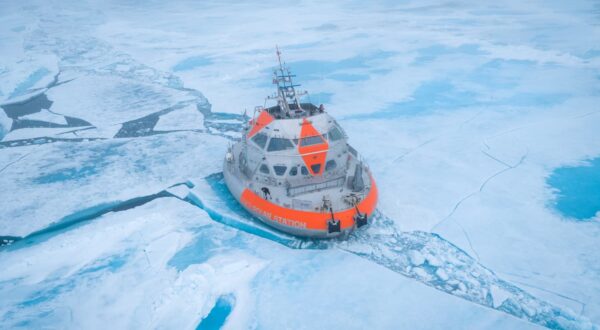
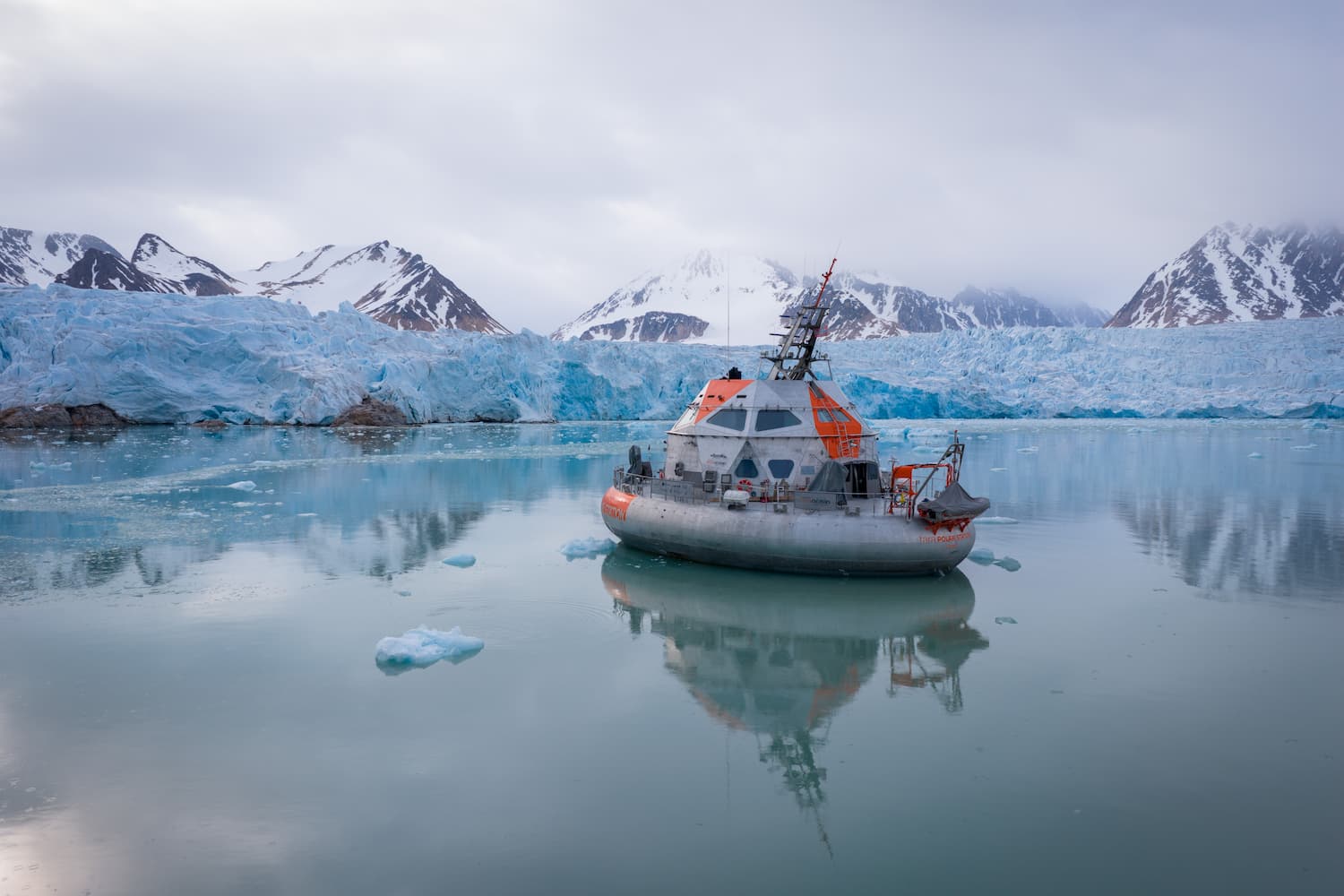
Tara Polar Station, our drifting polar station specially designed to withstand ice, will begin a series of drifts in 2026 to document and understand the transformations of the polar ecosystem, inventory the richness of local biodiversity, and question scientific data.
The Arctic is much more than a frozen desert: it is an exceptional reservoir of life, where each species plays a vital role. Melting sea ice and climate change threaten this fragile balance. Protecting Arctic biodiversity means preserving the ocean, the survival of species, and our common future.
Key takeaways
- Arctic biodiversity includes terrestrial and marine species adapted to extreme environmental factors: temperatures, limited resources, light.
- Polar bears, seals, and walruses depend directly on sea ice for food and movement.
- The Arctic is home to marine biodiversity that is essential to global ocean food chains.
- The reduction in the thickness and extent of sea ice is leading to a loss of habitat for many species.
- Protecting Arctic flora and fauna means preserving an ecosystem that is key to the planet’s balance.