10 minutes to understand: What is plankton?
Plankton is omnipresent in aquatic environments. Although often invisible to the naked eye, it plays a decisive role in the functioning of the ocean. In this article, discover an introduction to plankton, why it is essential to marine life, oxygen production, and major climatic balances. Learn how these underwater creatures support biodiversity and help regulate our planet.
What is plankton?
Definition: aquatic organisms that drift
Plankton does not refer to a single species: it is a group of organisms that live in water, both in the sea and in fresh water (ponds, lakes, estuaries). What they have in common is that they do not swim ‘against’ the current over long distances, they drift… It is this planktonic characteristic that defines them.
Plankton comes from the ancient Greek word planktos, meaning ‘wandering’. This group includes:
- single-celled organisms (such as certain microalgae),
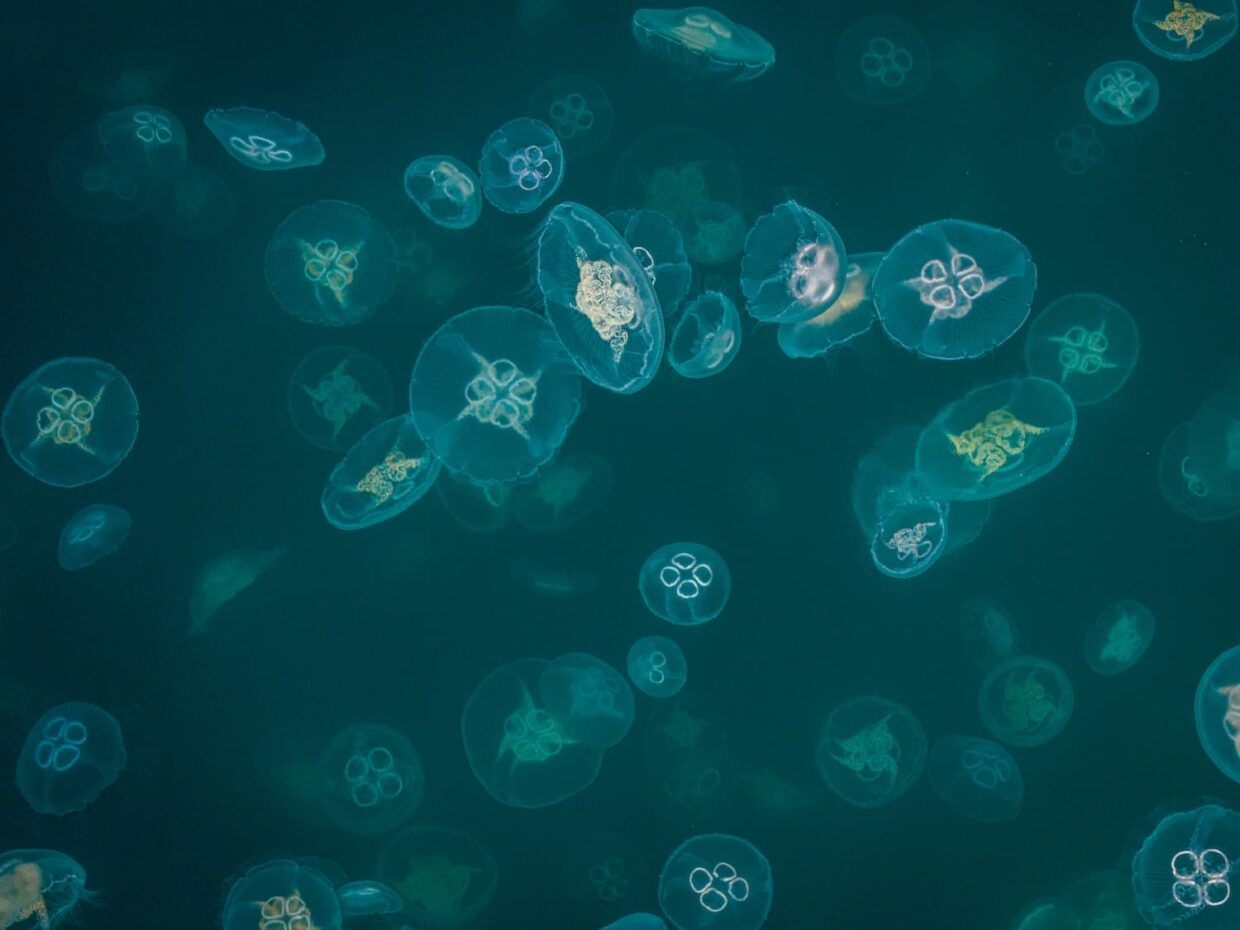
- adult multicellular organisms (such as jellyfish),
- juvenile forms: eggs, larvae, developing individuals (sometimes fish, sea urchins, crustaceans, etc.).
What makes up plankton?
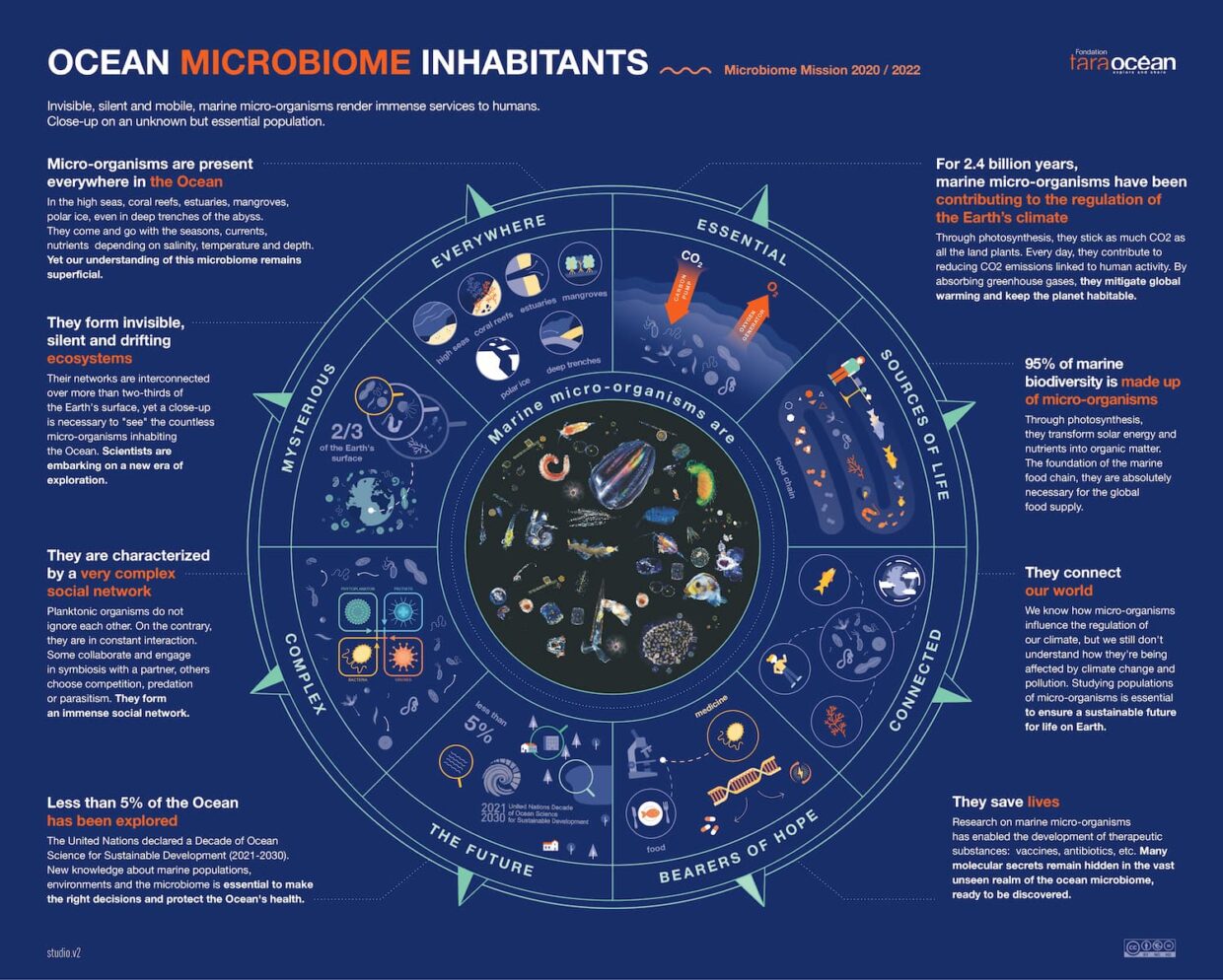
The Ocean is home to the largest number of living organisms on Earth. This marine biodiversity is composed of 95% micro-organisms.
The invisible people of the ocean: the marine microbiome
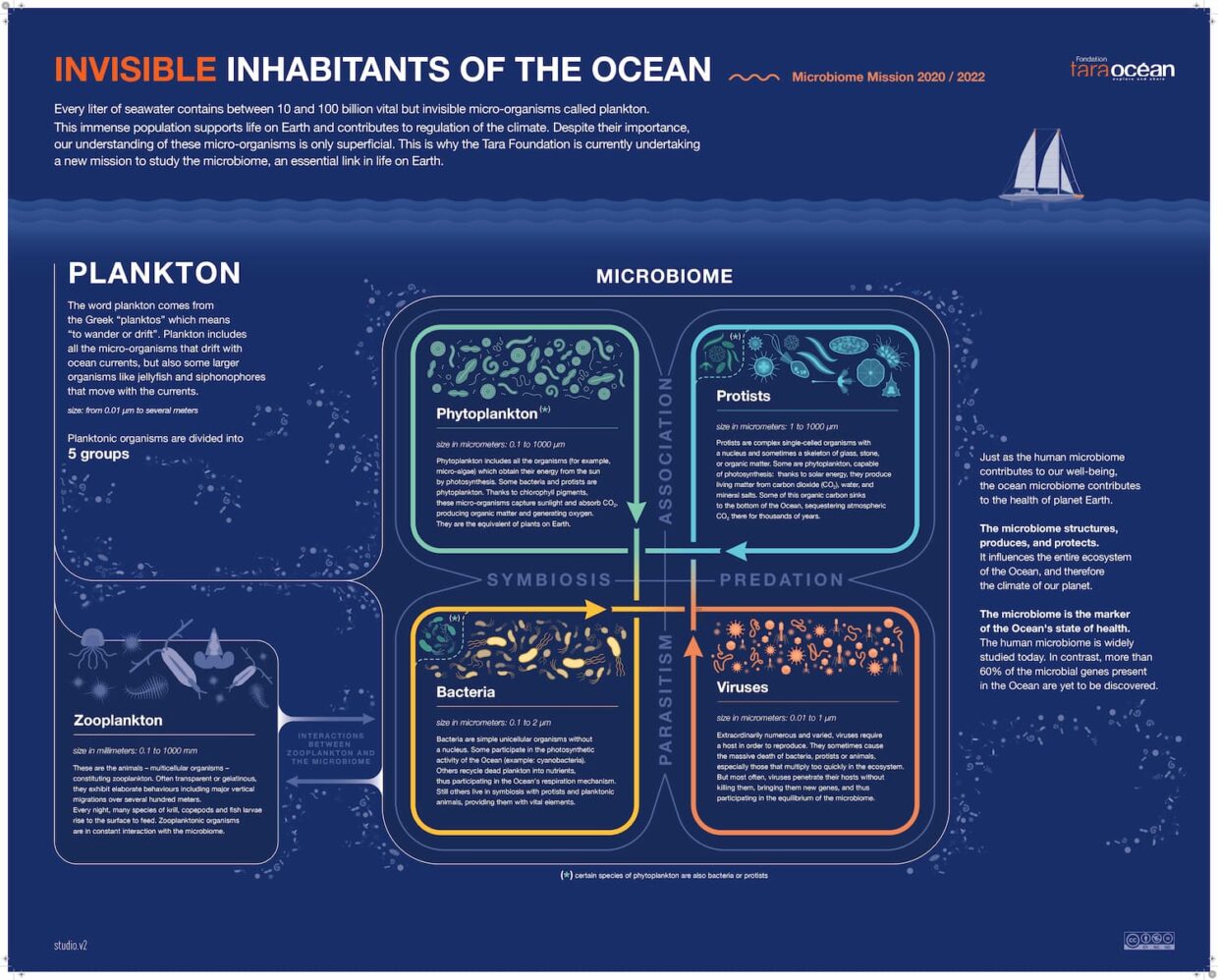
When we talk about plankton, we imagine visible organisms, but most of it is made up of microorganisms: bacteria, archaea, protists, and even viruses. This is the marine microbiome. This community is not limited to organisms that float. They can be found in water, on sediments, on corals, on fish, or on other surfaces.
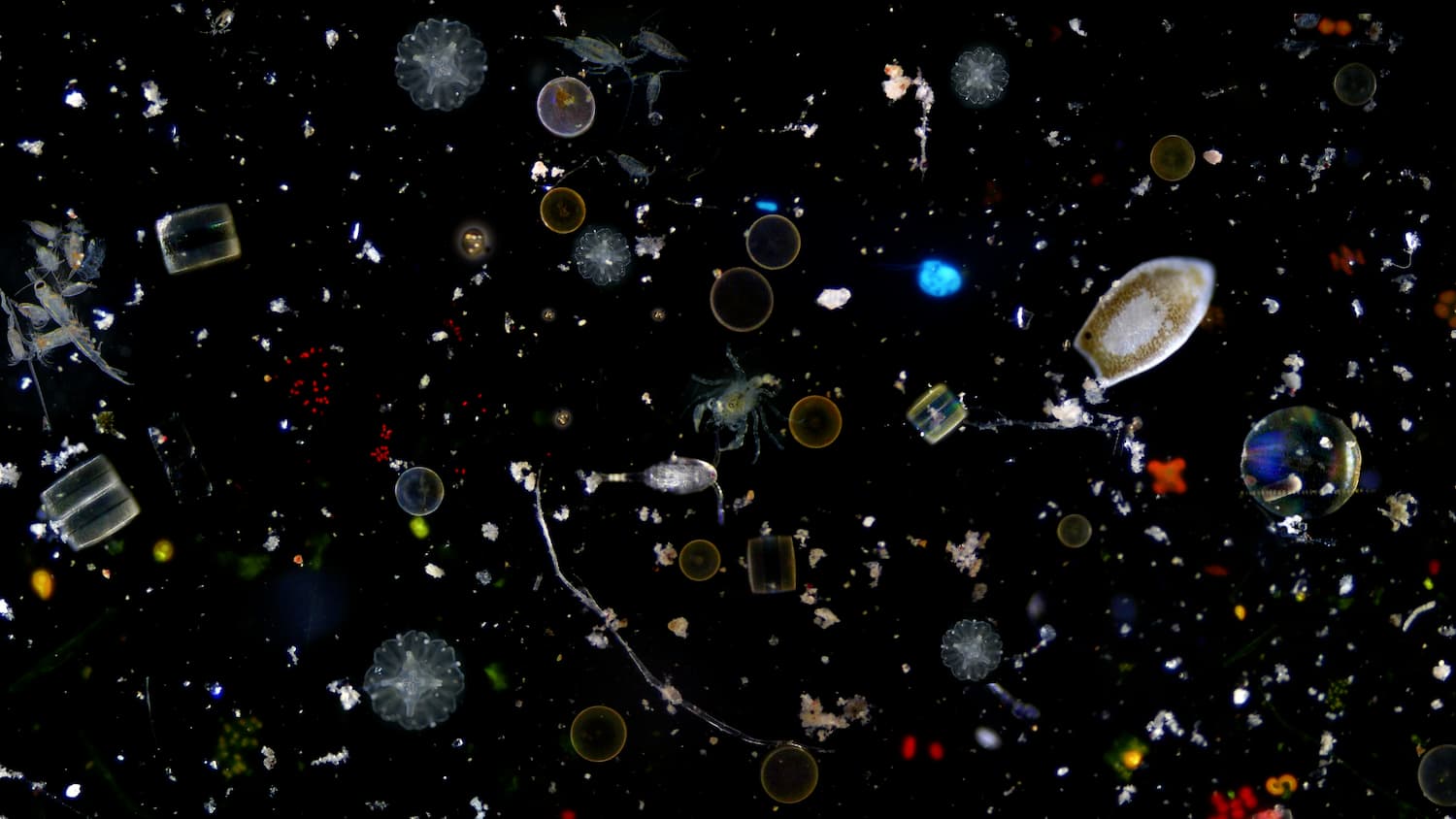
Plankton includes microscopic forms, both plant (phytoplankton) and animal (zooplankton).
Key points to remember:
- Plankton is a category related to the planktonic (floating/drifting) lifestyle.
- The marine microbiome is a category focused on microbes and their ecosystem.
Phytoplankton: plant plankton
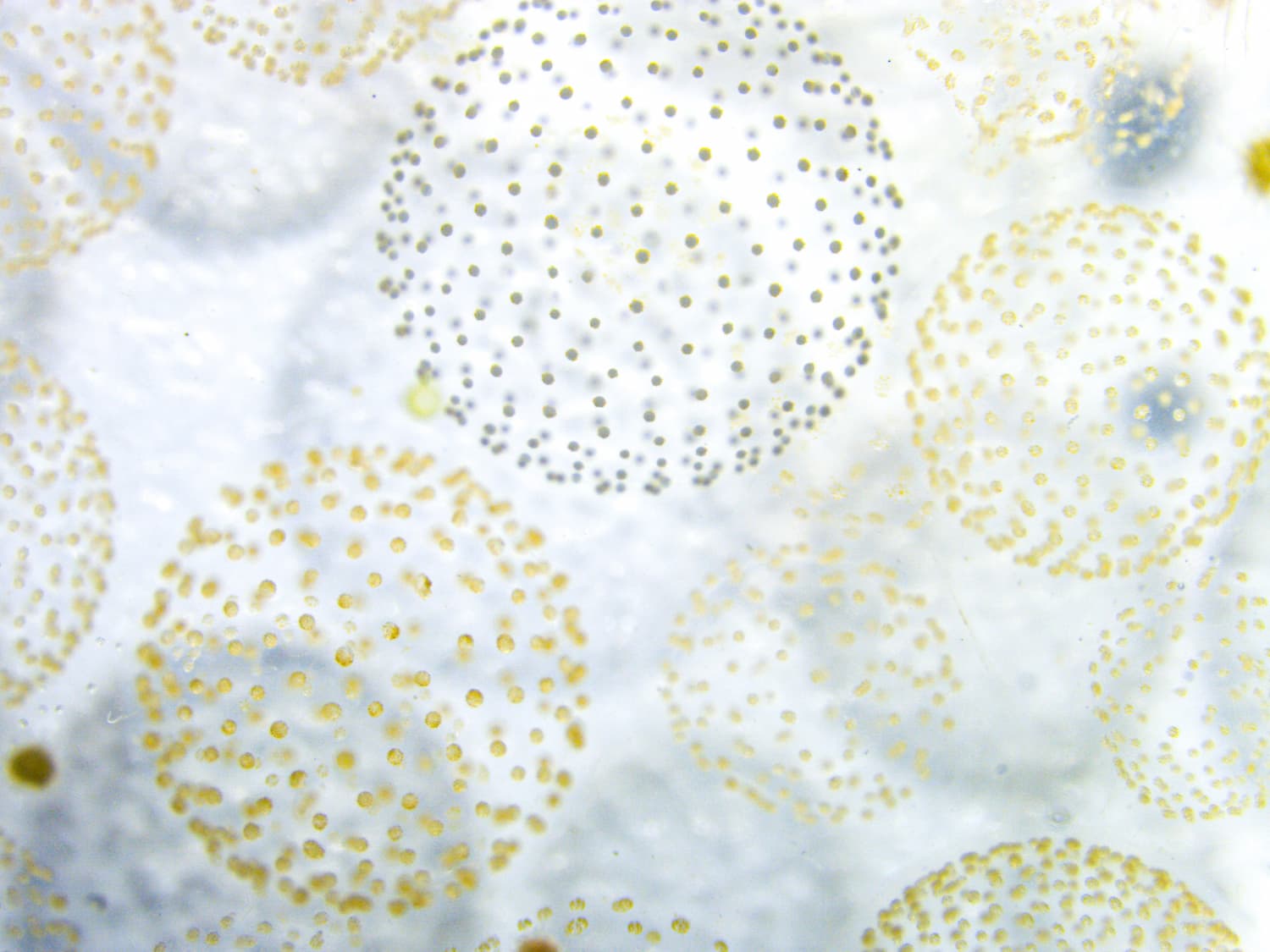
Phytoplankton comprises organisms that are ‘plant-like’ in a functional sense: they use light to produce living matter. Many are single-celled microalgae, sometimes tiny, sometimes grouped together in colonies.
Phytoplankton includes:
- diatoms (often surrounded by a kind of silica ‘shell’),
- certain dinoflagellates,
- cyanobacteria (often called ‘blue-green algae’, these are photosynthetic bacteria).
Phytoplankton accounts for a large part of primary production: it converts solar energy, seawater and carbon dioxide into organic matter. It is the starting point of the food web in the ocean.
Zooplankton: animal plankton
Zooplankton includes planktonic ‘animal’ organisms: they feed on other organisms (phytoplankton, bacteria, smaller prey). Their sizes and shapes vary greatly, from microscopic to animals visible to the naked eye.
Zooplankton includes:
- copepods
- krill
- crustacean, fish or sea urchin larvae
- planktonic stages of jellyfish.
Zooplankton acts as a ‘conveyor’: it converts the energy produced by microalgae into biomass available for larger animals. It is essential for the marine food chain.
Where does plankton live and how does it move?
Plankton lives mainly near the surface of the water, where light and nutrients are most available, but it also spreads out at depth depending on the season, temperature and weather.
It ‘moves’ mainly because the water is in motion (sea currents, tides, winds, mixing and turbulence, temperature and salinity gradients).
Some planktonic organisms move within the water column (vertical migration), often at night (nycthemeral migration), but most remain dependent on water masses.
Holoplankton and meroplankton: plankton throughout its life or at one stage?
Another simple way to classify plankton is to ask: ‘Is this organism planktonic throughout its entire life?’
- Permanent zooplankton (holoplankton): planktonic organisms from start to finish (e.g. many copepods).
- Temporary zooplankton (merozooplankton): planktonic organisms only at one stage (often eggs or larvae), before becoming benthic or nektonic.
Making this distinction is important for understanding species development. Many fish and marine invertebrates (sea urchins, crustaceans) depend on plankton during the most fragile stage of their life cycle.
Plankton, nekton, benthos: what are the differences?
In the ocean, there are three main “families”
- Plankton: organisms that float and drift, even if they are capable of moving.
- Nekton: organisms that swim actively and move against the current (fish, squid, marine mammals).
- Benthos: organisms that live on the bottom or in sediments (shellfish, certain crustaceans, corals).
Plankton is essential because it feeds the food chain. In addition, many nekton larvae begin their lives as plankton.
What role does plankton play in ecosystems?
1- First link in the marine food chain
Plankton is the starting point for much of life in the ocean. Phytoplankton captures energy from the sun and produces organic matter. Zooplankton (often crustaceans) then eats this phytoplankton… and in turn becomes a resource for fish, jellyfish, birds, and marine mammals.
Their role is essential. They break down and recycle matter, put nutrients (nitrogen, phosphorus, iron) back into circulation, and feed a cycle of organic matter recycling. In other words, without these microorganisms, much of the organic matter would remain “blocked” and the cycles would be less efficient.
Plankton is commonly associated with the first link in the chain: if this link weakens, the entire marine food chain becomes fragile. Conversely, when plankton is abundant and diverse, it supports greater biodiversity.
2- Oxygen production
Phytoplankton performs photosynthesis: it uses light, water, and CO₂ to produce matter and release oxygen, just like terrestrial plants. It performs as much photosynthesis as terrestrial plants, even though most of it is used directly in the ocean. Plankton supports the respiration of marine life and contributes to the overall balance of the planet.
3- Marine biodiversity base
Plankton does not just serve as “food”: it structures the entire ecosystem. Its diversity of forms (diatoms, dinoflagellates, larvae, small crustaceans) creates a mosaic of resources that allows many species to coexist.
It plays a role in:
- the availability of food for larvae and juveniles,
- the distribution of species (according to areas rich in plankton),
- the resilience of ecosystems to seasonal variations.
This is also why plankton is an indicator of the health of the ocean: rapid changes in composition, water color, or bloom frequency can signal an imbalance in the marine environment.
How does plankton affect marine life?
1- Food, growth, reproduction
For many species, life begins with a fragile phase: egg, larva, then juvenile. It is at these stages that they consume plankton. If food is scarce, growth slows, survival rates drop, and the next generation may collapse.
The amount of plankton in the ocean has a direct impact on the growth of fish larvae, reproduction, and the abundance of small crustaceans that many species feed on.
All marine species depend on the survival of plankton and its presence in the food chain.
2- Blooms and effects on the ecosystem
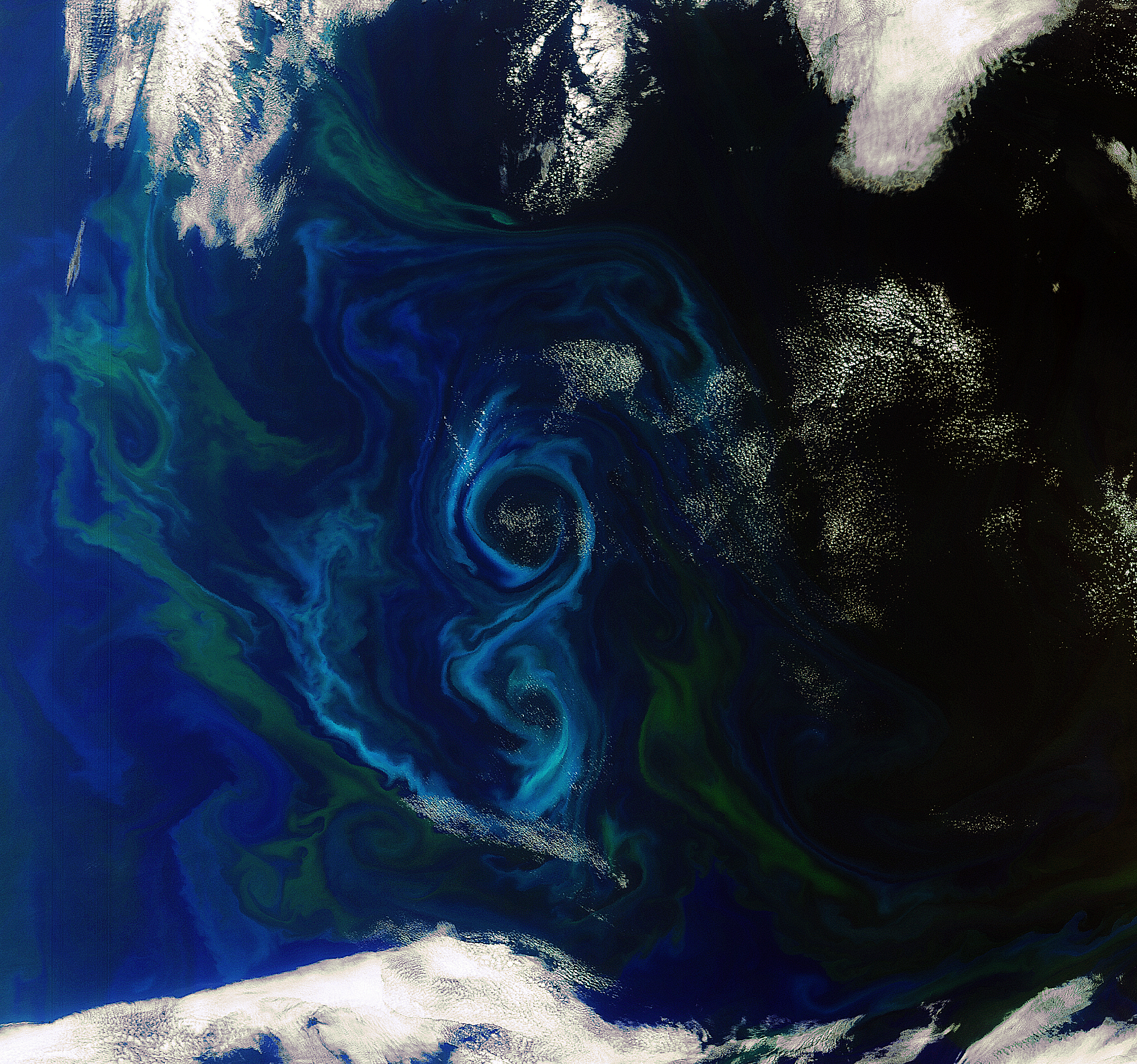
Sometimes phytoplankton multiply very quickly, causing what is known as a bloom. The water can then change color, turning greenish, brownish, or sometimes reddish depending on the dominant species (diatoms, dinoflagellates, etc.). This can happen in February or in summer, depending on the region, nutrient inputs, and weather conditions.
A bloom can be good news: more food for zooplankton, a “boost” for the food chain, a favorable window for certain fisheries, depending on the year.
But it can also reveal an imbalance if the bloom is too intense or dominated by a particular species. Some dinoflagellates, for example, can produce toxins. In other cases, the decomposition of a mass of phytoplankton can deplete the water of oxygen.
Protecting plankton means supporting the health of our planet and the health of the ecosystems on which we depend.
How does plankton contribute to the climate?
The carbon cycle
Phytoplankton captures CO₂ to grow, producing organic matter. Some of this matter is consumed, transformed, and then exported to the depths in the form of particles, waste, or dead organisms. Carbon can be stored for varying lengths of time. This is the “biological pump”: a major natural mechanism that is part of the carbon cycle.
Global warming
Global warming is changing the ocean in several ways: temperature, stratification (less mixing), acidification, and changes in nutrients. Plankton is very sensitive to these parameters.
If any of the physical and chemical parameters of the water change, biodiversity can be affected. For example, the geographical distribution of plankton species can be altered (some “move” northward), and blooms can occur earlier, later, or less regularly. The average size of organisms can vary (with a possible trend towards smaller sizes depending on the context). The composition of organisms in an area may also change (diatoms and dinoflagellates), affecting the food chain.
Ocean acidification (linked to CO₂ absorption) alters the chemistry of seawater and can reduce the availability of carbonate ions, which are essential for the formation of calcium carbonate. However, certain planktonic organisms with calcareous shells, such as coccolithophores and foraminifera, build their structures using this material. When calcification becomes more costly, these species may see their calcification capacity decrease, resulting in thinner shells or slower growth. At the ecosystem level, these changes can influence the carbon pump (export of matter to the deep sea) and, more broadly, climate regulation.
In some areas, when there is less vertical mixing, fewer nutrients are available at the surface, potentially leading to lower primary production.
Elsewhere, the effects may be different: the ocean is complex, and responses vary from region to region.
What is the biomass of plankton in the ocean?
Biomass: definition and why is it difficult to estimate?
Biomass refers to the amount of living matter present in an environment at a given moment. For plankton, this is a real challenge to measure because it is dispersed over a huge volume, its numbers vary greatly depending on the season, weather, and nutrients, and it consists of organisms of very different sizes, from microscopic to visible.
Above all, plankton is constantly renewing itself. Its “instantaneous” biomass may seem small compared to other forms of life, but its activity can be significant, as it multiplies rapidly as soon as conditions are favorable.
How is plankton biomass measured?
Scientists combine several methods. For example, the following are used:
- Ocean measurements
- plankton nets (to capture zooplankton and certain sizes)
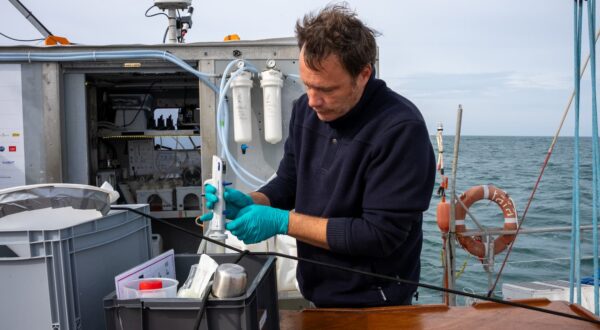
- water sampling followed by laboratory analysis (microscope, counting, DNA)
- onboard sensors (fluorescence, particles)
- Indicators for phytoplankton
- chlorophyll (the main pigment in photosynthesis responsible for the green color)
- optical measurements to estimate abundance and composition
- Large-scale observation
- satellites: map surface trends (water color, chlorophyll)
- data series and study reports covering several years
Each approach has its limitations: a satellite mainly “sees” the surface, a net depends on the size of the organisms, and laboratory analysis takes time. Hence the value of combining sources to obtain reliable data.
Distribution and “percentage”
We often look for a single percentage of plankton biomass in the ocean. In reality, biomass is:
- Uneven depending on the area
- rich areas: coasts, upwellings, fronts, certain semi-enclosed seas
- poor areas: large ocean gyres
- Varies over time
- seasonal blooms, weather events, nutrient inputs
- variations sometimes visible in the color of the water
- Small quantity but significant impact
- rapid renewal
- key role in primary production and cycles
Even though plankton weighs little in terms of biomass at any given moment, it can support a significant portion of marine biological activity. It is precisely this contrast that makes it so powerful.
How can plankton be observed ?
Good news: even without a microscope, you can “see” plankton by its effects. On a coastline, at sea, or by a lake, certain signs are telling. With the naked eye, you can spot: water that changes color (green, brown, red depending on the species), a “soup” or filaments on the surface after a calm period, nocturnal bioluminescence in certain waters, or small gelatinous masses (planktonic stages of jellyfish, salps, etc.).
What can affect plankton?
Plankton lives in a delicate balance. It reacts quickly to changes, making it an excellent indicator of the state of the ocean… but also a vulnerable group.
Among the major pressures:
- climate change: warming, stratification, disruption of seasons,
- acidification: impact on certain species and on water chemistry,
- pollution: hydrocarbons, pesticides, metals, disruptors,
- microplastics: possible ingestion by certain organisms,
- eutrophication: excess nutrients near coastlines → excessive blooms,
- changes in habitats and coastal water quality.
Certain species with shells or calcareous structures may also be affected by the availability of calcium carbonate.
Plankton is a sentinel of the ocean, supporting the marine food chain, biodiversity, and major cycles such as the carbon cycle. Understanding its role means better understanding the ocean… and our own dependence on its health.
Frequently asked questions
Is plankton visible to the naked eye?
Yes and no. Most plankton is microscopic: impossible to see without tools. But certain signs may be visible:
- a bloom that colors the water,
- gelatinous aggregates on the surface,
- larger planktonic organisms (certain larvae, small jellyfish).
In freshwater (ponds, lakes) as well as in the sea, visibility depends greatly on the season, light, and nutrients.
Is plankton dangerous?
Most of the time, no. But there are specific situations, especially during blooms dominated by certain species (often dinoflagellates) that can produce toxins. These episodes can contaminate filter-feeding shellfish or temporarily affect certain uses. The risk is sporadic, localized, and monitored in many countries.
Key points to remember
- Plankton refers to aquatic organisms (plants and animals) that float and drift with the currents.
- It includes microscopic and visible organisms: phytoplankton (plants such as microalgae), zooplankton (animals such as copepods, larvae, jellyfish), as well as some planktonic bacteria and protists.
- Plankton forms the basis of the marine food chain: without it, krill populations decline, fish stocks are reduced, and the balance of the entire ecosystem is weakened.
- Phytoplankton produces oxygen and participates in the carbon cycle by absorbing carbon dioxide.
- It is an indicator of the health of marine environments: blooms, water colors, and seasonal changes reflect the state of the environment.
- Its biomass may seem “small,” but it renews itself rapidly.