Why have corals long baffled scientists?
Hard as stone, branched like a plant, alive like an animal: coral has long defied the categories of living things. For centuries, scholars, doctors, naturalists and collectors sought to understand this strange red substance that fishermen brought up from the seabed. Was it a plant? A mineral? An intermediate creature? It was not until the 18th century that its animal nature was fully recognised.
The scientific history of coral thus tells of much more than a biological discovery. It reveals how European societies conceived of the ocean, classified living organisms, interpreted the metamorphoses of nature, and then gradually replaced the knowledge inherited from antiquity with observation, experimentation and modern marine biology.
Coral: a 2,000-year-old scientific mystery
A mythological origin: Medusa’s blood and petrified seaweed
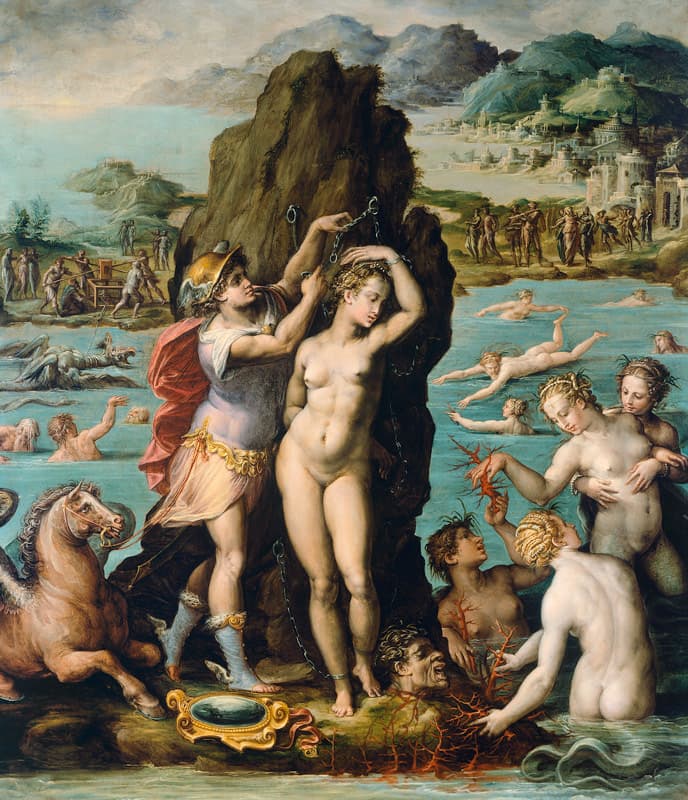
In antiquity, coral was initially associated with the world of myth. In Book IV of Metamorphoses, Ovid recounts the marvellous origin of coral through the story of Perseus and Andromeda. After rescuing Andromeda from a sea monster, Perseus placed Medusa’s severed head on a bed of seaweed. The Gorgon’s petrifying power then transformed this marine vegetation into coral.
This poetic account offers a vivid explanation for one of the phenomena that most intrigued ancient observers: coral appears supple in water, yet hardens on contact with the air. The mythological metamorphosis thus recounts, in its own way, a naturalist observation. Coral becomes a petrified marine plant, a plant that has passed from the world of water to that of stone.
This idea then runs through ancient texts. Theophrastus, Pliny the Elder and Dioscorides describe coral as an ambiguous entity, both plant and mineral. It is nicknamed the ‘stone tree’, ‘lithophyte’, ‘petrified plant’ or even ‘lithodendron’. All these names reflect the same difficulty in describing it: coral resembles a branch, grows in the sea, yet possesses the hardness of a stone.
A plant turned to stone: coral in ancient and medieval thought
For much of Western history, coral was interpreted through the theory of the elements. The transition from water to air was thus understood as a transformation of its nature. Coral, a marine plant in its natural habitat, was believed to become a mineral when exposed to air.
This view persisted into the Middle Ages. Coral featured in herbals and medical treatises amongst the ‘simples’, that is to say, natural substances used for healing. It was ground into powder, worn as an amulet or rosary, and believed to possess protective and medicinal properties.
Its uses were also based on the theory of signatures, as developed by Michel Foucault in his book Les Mots et les Choses (Gallimard, 1966), which links the appearance or behaviour of a substance to its supposed effects. Since coral hardens, dries out and petrifies, it was regarded as a desiccant (a moisture absorber). As it is red, it is associated with blood. It can therefore be used to treat haemorrhages or worn as a protective talisman.
Coral is therefore not merely a natural object. It is also a remedy, a precious material, a symbol and an object of belief. Its value stems as much from its rarity as from its strangeness.
In the Renaissance, a wonder of the sea
In the Renaissance, the rise of printing encouraged the rediscovery and dissemination of ancient texts. Knowledge about coral became more widespread, but it was still largely interpreted through the lens of Greek and Latin authors. Coral remained a marine plant that had turned to stone.
What changed was the intensity of the curiosity it aroused. Scholars of the modern era were fascinated by the power of the sea, its fertility, and its capacity to produce strange forms. Coral embodied this creative sea, capable of giving rise to monsters, minerals, plants and beings that fell somewhere in between.
For certain thinkers, particularly those influenced by alchemical thought and the early days of modern chemistry, coral became the prime example of the transformation of matter. Paracelsus, and later other scholars following in his footsteps, emphasised the role of salt, water and petrifying forces. The sea was not merely a habitat: it was also a natural laboratory, capable of hardening, transforming and mineralising.
Coral in cabinets of curiosities
In the 16th and 17th centuries, coral held a prominent place in cabinets of curiosities. These collections brought together rare objects, both natural and man-made: shells, fossils, minerals, exotic plants, stuffed animals, scientific instruments and precious objects from distant lands.
Coral was particularly prized because it blurred the boundaries between different categories. It resembles a plant, possesses the solidity of a stone, comes from the depths of the sea and can be mounted on precious supports. It bears witness to nature’s creativity and its ability to produce hybrid and surprising forms.
At that time, it was sometimes likened to dendrites – those branched mineral formations that evoke trees or plants. Certain chemical experiments, such as the production of ‘metal trees’, reinforced this fascination with the metamorphoses of matter. Coral thus became an object that was at once scientific, aesthetic and philosophical.
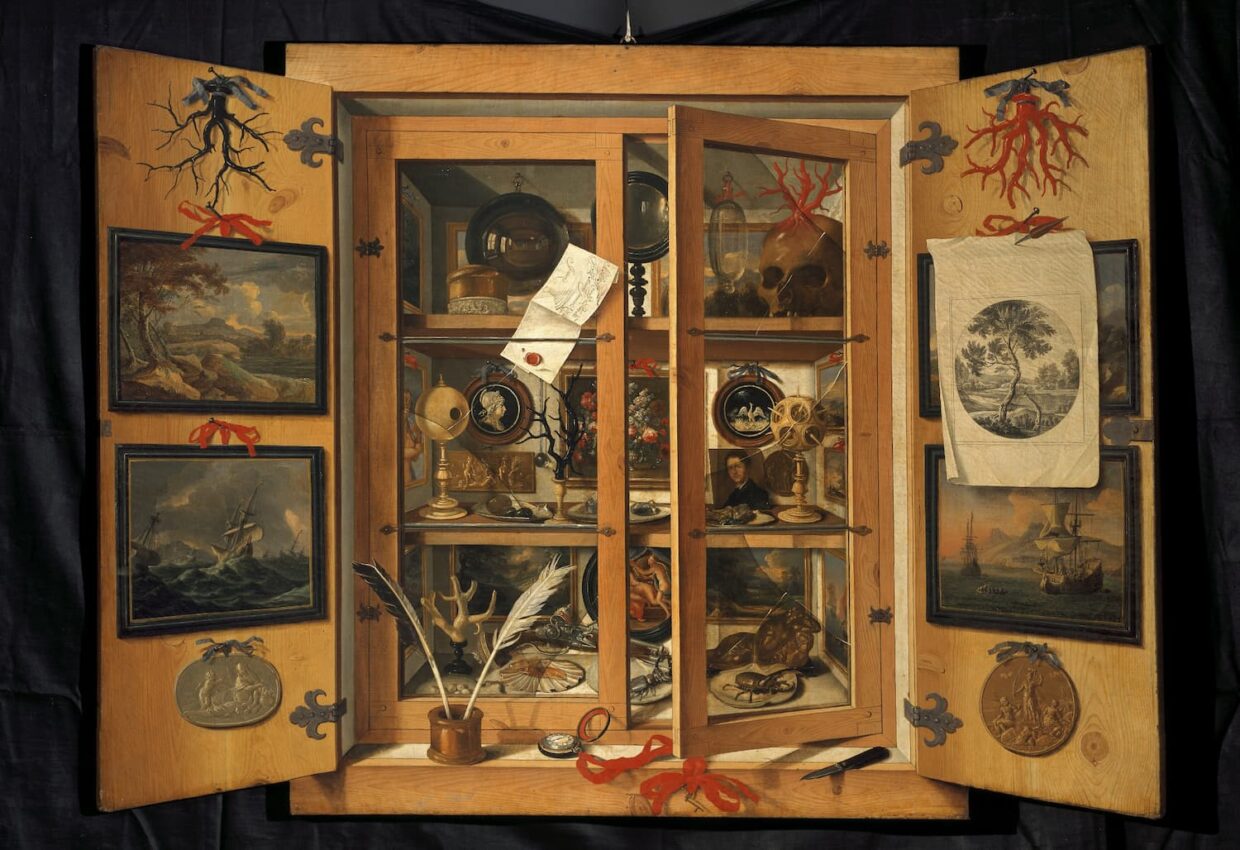
But little by little, a question begins to take shape: how exactly is coral formed?
The ‘petrifying sap’: the transformation
From the 16th century onwards, and even more so in the 17th, scholars sought to explain the mechanism behind the formation of coral. The old theory of a plant hardening on contact with the air was no longer sufficient. They needed to understand the process.
Several hypotheses emerged. Some envisaged a “petrifying sap”, a mineral or saline fluid that would penetrate the living matter and gradually transform it into stone. Others believed that coral formed through the accumulation of particles, much like certain limestone concretions observed in caves.
Athanasius Kircher, a 17th-century Jesuit scholar, thus referred to a ‘succus lapidificus’, a fluid composed of mineral and saline particles. This sap was thought to erode the soft parts of the coral and gradually replace them, producing a continuous transformation of the living organism into stone.
Coral was thus still conceived as a petrified plant, but the explanation became more material, more physical, almost chemical. The next step was to identify the causes of this metamorphosis.
Observing coral in its natural habitat
A decisive shift took place when scholars began to leave their libraries and cabinets of curiosities to observe coral in its natural habitat. Bookish knowledge and collections were no longer enough. It was necessary to go to the coast, set out to sea with the fishermen, examine the freshly harvested branches, touch them, compare them and experiment.
The Mediterranean red coral, Corallium rubrum, came to play a central role. Brought in by fishermen and harvested for jewellery and trade, it also became the subject of scientific investigation.
In 1674, the botanist Paolo Silvio Boccone published his observations on the nature of coral. He was interested in its growth, structure and origin. Although coral was still often interpreted as a mineral or plant-based substance, the approach was changing: scholars began to rely on direct observations, sometimes carried out on board fishing vessels.
This move away from the study marked an important milestone in the history of marine science. Coral was no longer merely a curiosity displayed on a shelf: it became a living organism to be observed.
Marsigli and the ‘coral flowers’
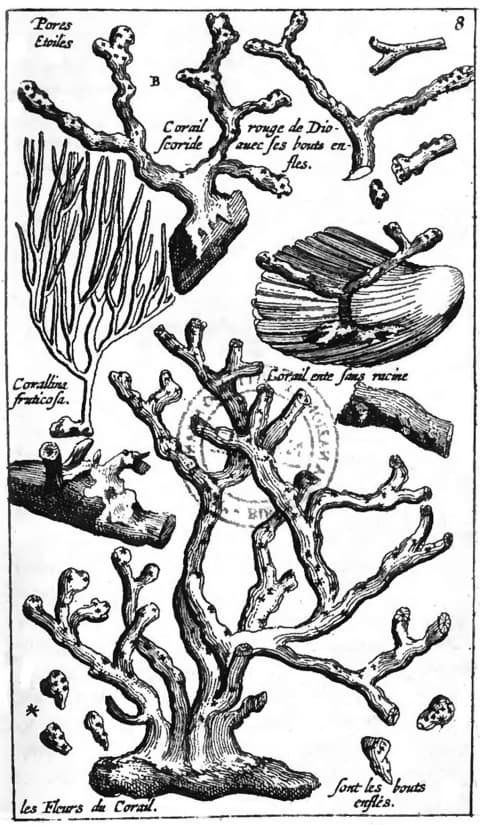
In the early 18th century, Luigi Ferdinando Marsigli, a Bolognese naturalist with a passion for the sea, carried out observations on red coral in Marseille. He drew in particular on the knowledge of local fishermen and on his observations of freshly harvested branches.
His experiment has become famous. Marsigli placed branches of coral in a vase filled with seawater. After a few hours, small white shapes appeared on their surface, resembling star-shaped flowers. For him, this observation confirmed the plant-like nature of coral. The ‘coral flowers’ were seen as proof that the organism belonged to the plant kingdom.
But this experiment was also to pave the way for a radically different interpretation.
Peyssonnel: flowers are animals
Jean-André Peyssonnel, a doctor and naturalist from Marseille, drew on Marsigli’s observations. He saw the same ‘flowers’, but did not interpret them in the same way. For him, these white forms were not flowers: they were small animals.
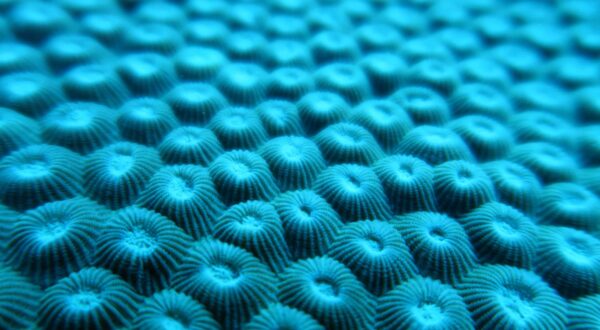
The star-shaped pores visible on the surface of the coral are therefore not merely plant-like patterns. They are the chambers where polyps live, capable of extending, retracting and capturing their food. Coral is not a petrified plant: it is an animal colony that builds a calcareous skeleton.
This idea turned established classifications on their head. It was initially met with scepticism by part of the scientific community, particularly at the Academy of Sciences. Peyssonnel was, in effect, overturning centuries of interpretation: he claimed that what had been taken for flowers were in fact animals.
Gradually, however, new observations confirmed his intuition. By the mid-18th century, the animal nature of coral was finally recognised. In 1833, the term ‘Anthozoa’, literally ‘flower-shaped animals’, came to sum up this history: coral is indeed an animal, but one that had long resembled a flower in the eyes of scientists.
Modern coral: an animal, a colony, a builder
Today, coral is classified among the Cnidaria, the same group as jellyfish and sea anemones. More specifically, corals belong to the Anthozoa. Many of them live in colonies made up of small animals called polyps.
Each polyp has a mouth surrounded by tentacles. In many reef-building corals, these polyps produce a calcareous skeleton. Over time, the accumulation of these skeletons forms reefs – veritable living structures capable of supporting exceptional biodiversity.
This colonial and structure-building nature explains the ecological significance of coral reefs. They are not simply underwater rocks. They are biological structures, produced by tiny animals, often associated with symbiotic microalgae known as zooxanthellae.
These algae live within the coral’s tissues and provide it with a significant proportion of its energy through photosynthesis. In return, the coral offers them shelter and nutrients. This symbiosis contributes to the growth of the calcareous skeleton and the vitality of the reefs.
Lacaze-Duthiers: coral at the crossroads of science, fishing and economics
In the 19th century, the scientific study of coral reached a new milestone with Henri de Lacaze-Duthiers. His work Natural History of Coral: Organisation, Reproduction, Fishing in Algeria, Industry and Trade, published in 1864, is a major study of red coral.
Lacaze-Duthiers did not merely describe the animal. He examined its anatomy, reproduction, the formation of its skeleton and its growth rate, as well as fishing practices, regulations, and the coral industry and trade.
His work demonstrates that coral is both a biological entity and an economic resource. In the 19th century, red coral was harvested for use in jewellery and attracted the attention of the authorities. A better understanding of coral also meant better organisation of its harvesting, protection of a precious resource and support for a commercial activity.
This aspect serves as a reminder that the history of the natural sciences is never entirely separate from political, economic and social contexts. Knowledge about coral is built up in collaboration with fishermen, naturalists, governments, traders, collectors and scientific institutions.
From red coral to coral reefs: a story that remains relevant today
Since the 2000s, red coral has been the subject of renewed scientific interest. Research focuses on its ecology, reproduction, growth, biomineralisation, the composition of its skeleton and its response to environmental pressures. Coral is of interest to marine biology, materials science, environmental history and conservation.
More broadly, coral reefs are now recognised as major ecosystems. They are among the richest habitats on the planet: although they cover only a limited area of the ocean, they are home to a considerable proportion of marine biodiversity. Fish, molluscs, crustaceans, algae, sponges and countless other organisms find refuge, food or breeding grounds there.
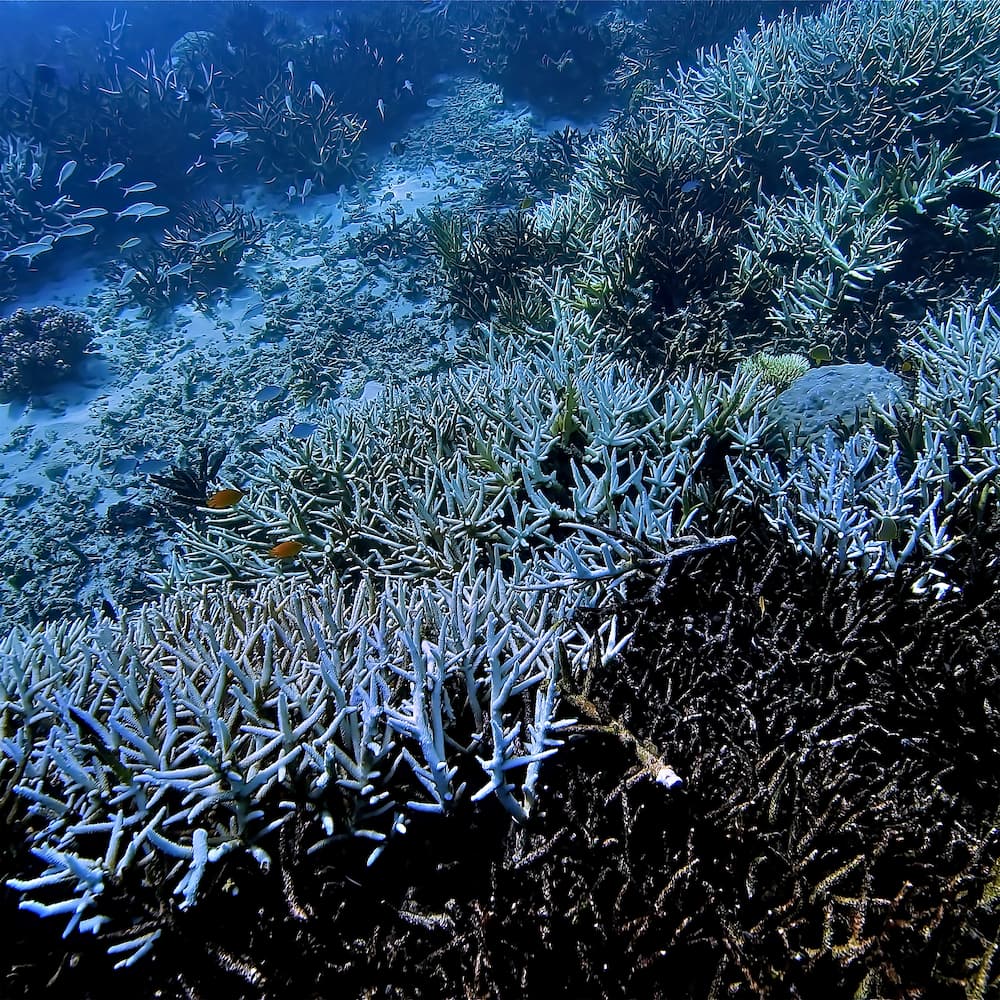
But this richness is fragile. Global warming, ocean acidification, pollution, overfishing, coastal development and certain forms of tourism are placing increasing pressure on corals. When water temperatures remain too high for too long, the symbiotic relationship between the coral and its microalgae can break down: the coral bleaches. If it does not quickly return to favourable conditions, it may die.
Understanding that coral is a living animal, and not an inert rock, changes the way we view reefs.
A lesson in the history of science
The history of coral is a lesson in scientific patience. For centuries, scholars classified it according to what they saw: a branch-like shape, a stone-like hardness, a blood-red colour. They interpreted it using the intellectual tools of their time: myth, the theory of the elements, the theory of signatures, and analogies with plants or minerals.
Then methods changed. Scientists observed living coral, went out to sea with fishermen, replicated experiments, used the microscope, and compared structures and behaviours. Coral thus evolved from being an ambiguous marvel to a colonial animal that builds reefs.
But this story is not merely of historical interest. It reminds us that the words we use to name living things shape the way we protect them. As long as coral is perceived as a stone or an underwater decoration, its destruction seems abstract. Once we understand it as a living organism – fragile, slow-growing and essential to entire ecosystems – its protection becomes vital.
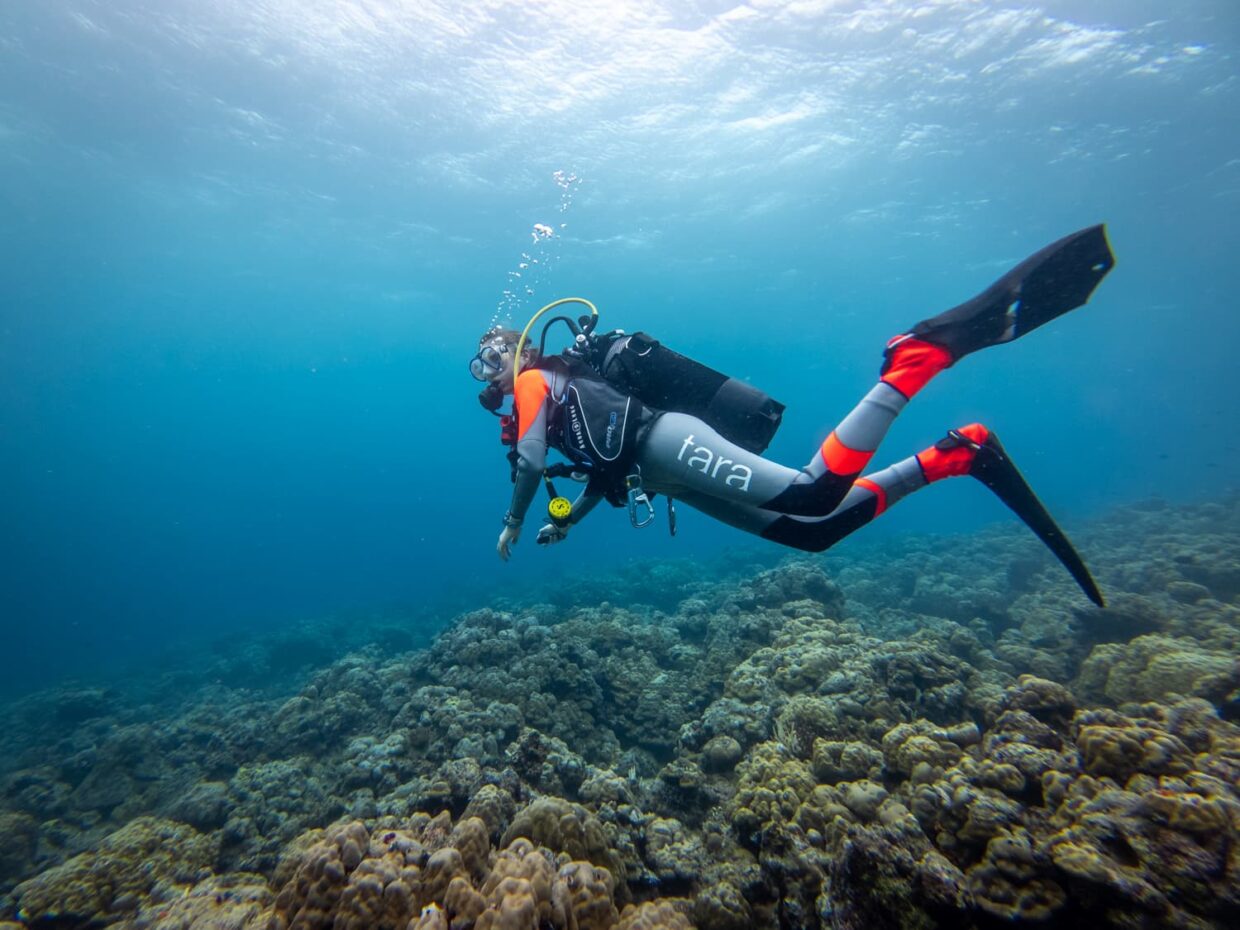
This scientific realisation is now giving rise to expeditions, notably those organised by the Tara Ocean Foundation. Ten years after the departure of Tara Pacific, the research schooner Tara has set sail on its new expedition, Tara Coral, with one key question: why and how do some corals withstand global warming? The ultimate aim is to identify naturally resilient coral populations in order to inform conservation strategies at an international level.